How to Become a Kitesurfing Instructor (2026 Guide)
3 May 2026
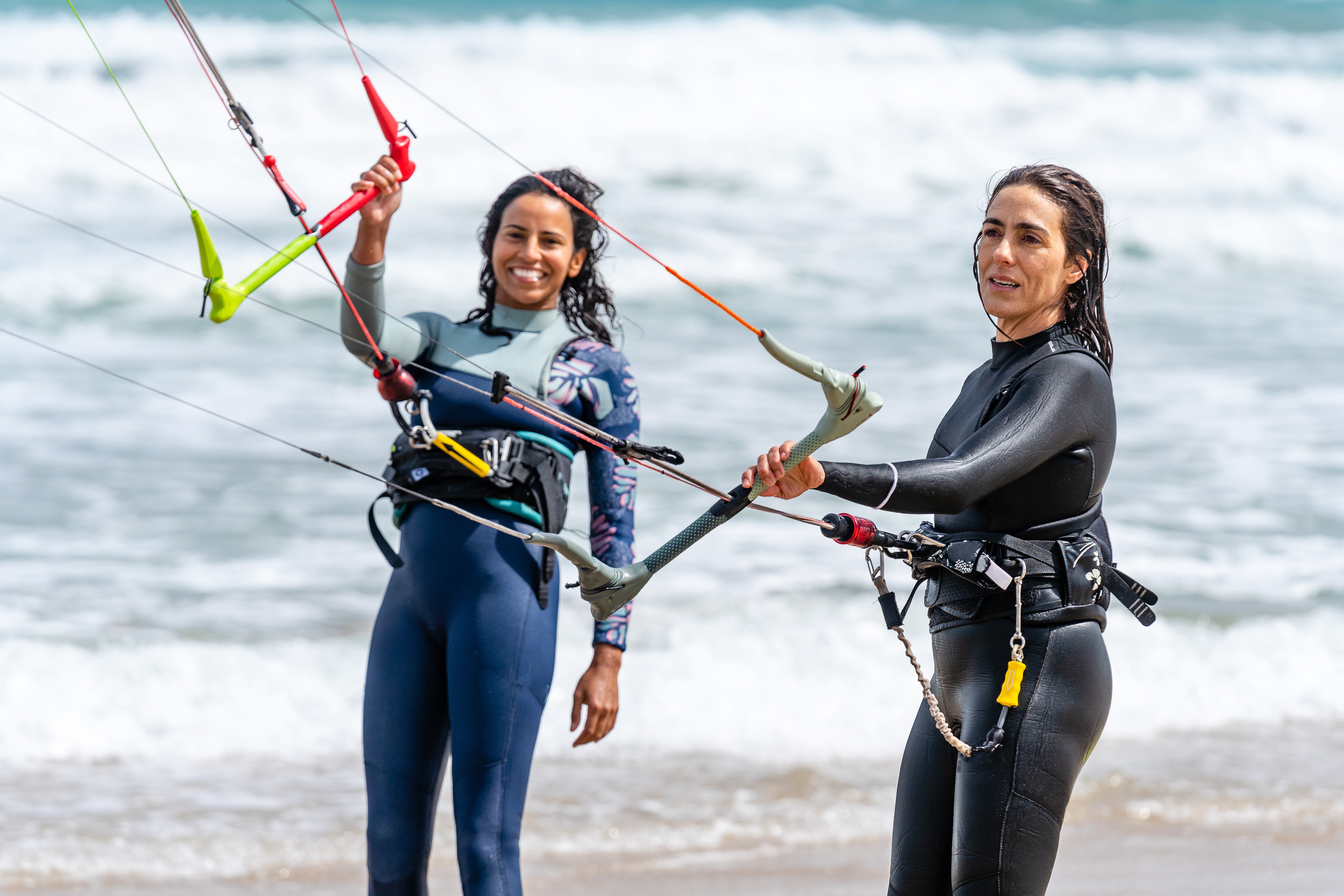
How to Become a Kitesurfing Instructor (2026 Guide)
Kitesurfing instruction is one of the fastest-growing roles in the watersports industry — and one of the most globally portable. Certified kitesurfing instructors are in demand from Tarifa to Mui Ne, from the Outer Banks to the Red Sea. If you're a capable kiter with a passion for sharing the sport, this guide covers everything you need to get from student to certified instructor.
What Does a Kitesurfing Instructor Do?
Kitesurfing instructors guide students through one of the steeper learning curves in watersports — from first kite contact on the beach through to independent riding. The job is physically demanding, safety-critical, and deeply rewarding when a student gets up and rides for the first time.
You'll typically work at a kitesurfing school or watersports centre, delivering one-to-one and small group lessons, managing students across multiple stages of learning, operating safety equipment, and making constant real-time judgements about conditions and risk. Unlike many watersports disciplines, kitesurfing instruction carries significant responsibility — the kit is powerful and the risk of injury without proper supervision is real.
Step 1: Build Your Kitesurfing Experience
No certification body will put you in front of students until you're a genuinely competent, independent kiter. The baseline expectation isn't just riding — it's riding confidently in a wide range of conditions, understanding the kit deeply, and having the situational awareness to manage others safely on the water.
Minimum ability expected before instructor training:
Confident kite control in varied wind strengths
Reliable water starts and upwind riding
Body dragging and self-rescue proficiency
Comfortable transitions (heel-to-heel and toe-side)
Independent riding in 15–25 knot conditions
How to build your experience:
Take structured lessons through an IKO or BKSA-affiliated school
Kite regularly across a range of locations and wind conditions
Assist at a kitesurfing school before applying for instructor training
Progress toward jumps and intermediate tricks — not required for entry-level certification, but expected over time
Log your sessions and hours — most programmes will ask
Budget 1–2 years of regular kitesurfing before seriously pursuing instructor certification, depending on how often you're on the water.
Step 2: Choose Your Certification Path
Three organisations dominate kitesurfing instructor certification internationally. The right choice depends primarily on where you plan to work.
International Kiteboarding Organization (IKO)
The IKO is the most globally recognised kitesurfing instructor certification and the dominant standard at schools across Europe, the Americas, Asia, and Africa. If you plan to work internationally or want the broadest possible job market access, IKO is the default choice. Their structured certification pathway runs from Assistant Instructor through to Instructor Trainer, with clear level progression.
British Kitesports Association (BKSA)
The BKSA is the governing body for kitesurfing in the UK and is widely recognised across Europe and in many international markets. For instructors based in the UK or planning to work at UK schools and European resorts, BKSA is a strong and well-respected credential. Many employers in the Mediterranean and Atlantic markets accept either BKSA or IKO.
VDWS International
VDWS is a Central European organisation with strong recognition in Germany, Austria, the Netherlands, and continental European watersports markets. If your target market is Central or Northern Europe — particularly German-speaking countries — VDWS certification may be expected or preferred by local schools.
In practice: IKO is the safest choice for maximum global flexibility. BKSA is the right choice for UK-focused careers. Many experienced instructors eventually hold both IKO and BKSA for full pan-European and international coverage.
Step 3: Meet the Prerequisites
Entry requirements vary between organisations — always confirm with your training centre — but these are the standard baseline expectations.
Typical prerequisites:
Requirement Detail Minimum age 18 (most programmes) Kitesurfing ability Independent riding, upwind, transitions; body drag and self-rescue Water time 1–2 years regular kitesurfing typically expected First aid / CPR Required, current Swimming ability Strong swimmer required Powerboat handling RYA PB2 or equivalent required or strongly recommended
If you're not yet riding upwind consistently and comfortably, invest more time developing your riding before applying — arriving underprepared wastes the course fee and reduces your chances of passing assessment.
Step 4: Complete Your Instructor Training Course
Kitesurfing instructor courses typically run 5–7 days and combine beach, on-water, and classroom sessions. This is an intensive programme — expect long days, honest feedback, and a significant physical and mental workload.
Core topics covered:
Teaching beginners from first kite contact through to water starts
Lesson structure, progression frameworks, and session planning
Kite theory: wind windows, power zones, and aerodynamics
Weather reading, tide awareness, and site assessment
Safety protocols, rescue techniques, and emergency procedures
Managing equipment failure, tangled lines, and student crashes
Group management and communication in wind and noise
Assessment components:
Personal kitesurfing ability (observed riding in real conditions)
Assessed teaching sessions (delivered to peers or real students)
Theoretical exam (wind theory, safety, teaching methodology)
Rescue and emergency scenario handling
Popular locations for IKO and BKSA instructor training include Tarifa (Spain), the Canary Islands, Egypt's Red Sea coast, and UK coastal centres.
Step 5: Pass Your Instructor Assessment
The final assessment evaluates your riding, your teaching, and your safety management. Assessors want to see:
Confident, clean kitesurfing that you can demonstrate and articulate
Structured, clear lesson delivery from beach to water
Sound safety awareness — especially around beginners using powerful kites
Calm, decisive handling of problems and emergencies
Ability to give constructive feedback and adjust your approach
The safety element is non-negotiable. Kitesurfing instruction carries real risk; assessors won't pass candidates who aren't demonstrably competent in safety management regardless of their riding standard.
Step 6: Gain Your First Teaching Experience
Your first season as a certified kitesurfing instructor is where your teaching ability genuinely develops. Expect to work primarily with beginners initially — land drills, body dragging, and supervised water starts — progressing to more independent students as your experience builds.
Where to find first-season roles:
IKO and BKSA-affiliated kitesurfing schools
Mediterranean and Atlantic watersports centres
Windsurf and kite resorts hiring multi-discipline instructors
Gap year and adventure travel programmes
Independent kitesurfing schools in high-wind destinations
Browse kitesurfing instructor jobs on BoatyJobs →
High-demand markets for kitesurfing instructors include Tarifa, the Canary Islands, Greece, Egypt, Brazil, Cape Verde, and Sri Lanka. The global nature of the sport means strong instructors can follow the wind — and the season — around the world.
Step 7: Pursue Advanced Certifications (Optional)
Once working as an instructor, advanced qualifications unlock higher-level teaching and better-paid roles.
IKO Level 2 / Senior Instructor — for teaching intermediate and advanced riders
Wave riding or freestyle specialisation — for destination schools with experienced student bases
Instructor Trainer certification — for running instructor courses yourself
Windfoil / hydrofoil endorsement — fast-growing, premium rates
Kiteboard racing instructor — niche but growing with the sport's Olympic ambitions
RYA Powerboat Level 2 — essential for safety boat operation at most schools
Step 8: Keep Your Certification Valid
All major kitesurfing instructor certifications require periodic revalidation. The IKO requires renewal every two years — more frequent than sailing or windsurfing equivalents, reflecting the safety-critical nature of the discipline.
Stay current by:
Logging teaching days throughout each season
Keeping first aid and CPR certifications in date
Completing IKO or BKSA renewal requirements before expiry
Attending instructor update workshops when available
Staying current with equipment developments and evolving safety standards
How Long Does It Take to Become a Kitesurfing Instructor?
Starting from scratch with no kitesurfing experience, expect 2–4 years to develop the required riding ability and complete certification. If you're already an independent, upwind rider with 1–2 seasons of experience, you could be instructor-qualified within 6–12 months of focused preparation.
How Much Do Kitesurfing Instructors Earn?
Kitesurfing instruction is among the better-paid watersports disciplines, reflecting the technical demand and safety responsibility of the role.
Entry-level / first season: €1,500–€2,500/month + accommodation and food (typical Mediterranean contract)
Experienced instructor: €2,500–€3,500/month seasonal
Senior / head instructor: €35,000–€55,000+/year
Instructor Trainer: Premium rates; often combines school management with training delivery
Freelance / private lessons: €80–€200+/hour depending on location
Instructors who follow the wind internationally — European summer, then Cape Verde, Egypt, or Sri Lanka for the northern hemisphere winter — can sustain near year-round income.
Frequently Asked Questions
IKO or BKSA — which kitesurfing instructor certification should I get? IKO is the better choice for global flexibility — it's the most widely recognised certification worldwide and gives you access to the broadest job market. BKSA is the stronger credential for UK-based careers and European markets that are familiar with British watersports standards. For full flexibility, work toward both over time.
How dangerous is kitesurfing instruction? Kitesurfing carries real risk, and instructor training places heavy emphasis on managing that risk responsibly. The danger comes primarily from beginners with limited kite control — as an instructor, your role is to prevent situations from escalating before they become emergencies. Properly certified instructors with good safety protocols work in the sport for decades without serious incidents.
Do I need my own kit to become a kitesurfing instructor? Not for training — courses are run using school equipment. Once working as an instructor, most employers provide school kit. Having your own gear is useful for personal riding and demonstrating specific equipment, but it's not a prerequisite.
Can I teach kitesurfing and windsurfing? Yes, and doing so significantly increases your employability. Many watersports centres hire multi-discipline instructors who can teach across kitesurfing, windsurfing, and sometimes SUP or sailing. If you already windsurf, adding a kitesurfing qualification (or vice versa) is a strong career move.
What wind conditions do most kitesurfing schools operate in? Most schools operate in 12–25 knots. Below 12 knots is typically too light for beginner instruction; above 25–30 knots most schools will scale back or cancel beginner lessons. As an instructor, you'll develop strong judgement around operating limits over time.
Ready to Find a Kitesurfing Instructor Job?
BoatyJobs lists kitesurfing instructor vacancies across the UK, Europe, and globally — from first-season positions at beginner schools to senior and head instructor roles at established destinations.