How to Become a Surfing Instructor (2026 Guide)
7 May 2026
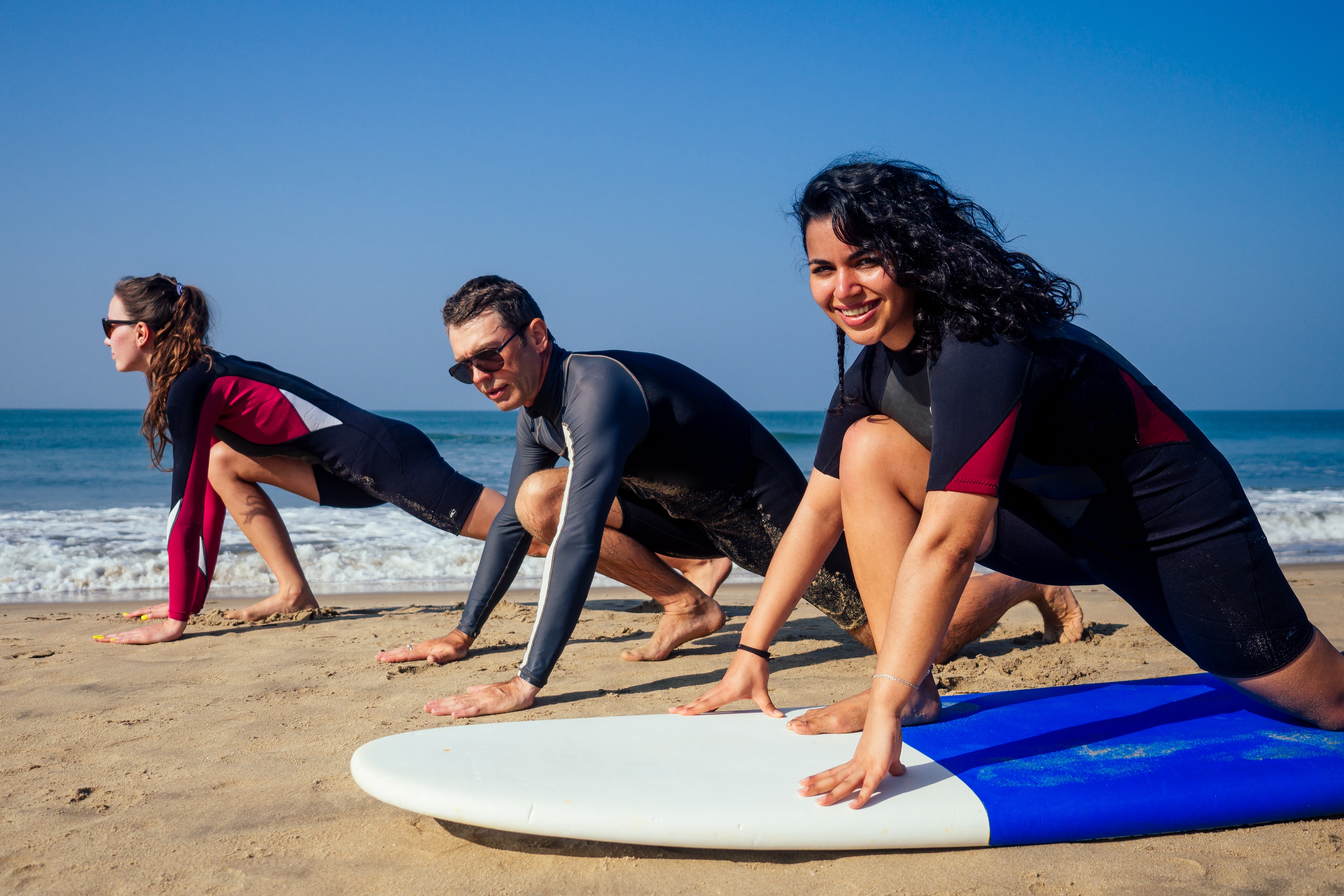
How to Become a Surfing Instructor (2026 Guide)
Surfing instruction is one of the most globally in-demand roles in the watersports industry. Qualified surf instructors work everywhere from the Atlantic coast of Ireland to Bali, from the Canary Islands to Costa Rica — and with surf tourism continuing to grow, the market for certified instructors has never been stronger.
If you're a capable surfer looking to make the water your workplace, this guide covers every step of the process.
What Does a Surfing Instructor Do?
Surf instructors introduce students to surfing and guide them through progressive skill development — from first-time beach briefings and whitewash rides through to green wave surfing and beyond. You'll typically work at a surf school, resort, or summer camp, managing groups in the water, reading conditions, and making constant real-time safety judgements in a dynamic, potentially hazardous environment.
The role demands strong personal surfing ability, excellent ocean awareness, clear communication, and calm, decisive safety management. Surf instruction carries genuine risk — the ocean doesn't forgive poor preparation — and certification bodies treat safety standards accordingly.
Step 1: Build Your Surfing Experience
Before any certification body will consider you for instructor training, you need to be a genuinely competent surfer with real experience across varied conditions and break types. The baseline isn't just standing up on whitewash — instructors are expected to surf green waves with confidence, read ocean conditions accurately, and manage themselves and others in a surf environment.
How to build your experience:
Learn through a reputable surf school and progress through structured levels
Surf regularly across different break types: beach breaks, point breaks, reef breaks
Build experience in a range of swell sizes and tidal conditions
Develop ocean awareness: reading rips, identifying hazards, understanding wave selection
Learn surf-specific rescue skills and water safety — ideally before your instructor course
Surf in different locations — variety builds adaptability and environmental awareness
Most certification bodies expect you to be surfing green waves confidently and consistently before applying for instructor training. If you're still primarily surfing whitewash, invest more time in your own development first.
Step 2: Choose Your Certification Path
Several organisations offer recognised surf instructor qualifications. The right choice depends on where you want to work and which markets you're targeting.
International Surfing Association (ISA)
The ISA is the World Surf League-affiliated global governing body for surfing and is the most internationally recognised surf instructor certification. ISA credentials are accepted across the broadest range of countries and are increasingly the standard expected by surf schools, resorts, and tourism operators in major surf destinations worldwide. If you want maximum global flexibility, ISA is the strongest choice.
Academy of Surfing Instructors (ASI)
ASI offers internationally recognised surf instructor certification alongside SUP and bodyboard qualifications. Widely accepted across Australia, the UK, Europe, Asia, and the Americas, ASI is a strong option particularly for instructors working in multi-discipline watersports environments or targeting the Australian market.
Surfing England (formerly British Surfing Association)
Surfing England is the national governing body for surfing in England and is the standard qualification expected by surf schools operating in the UK. Their Level 1 and Level 2 coach pathways are well-structured and aligned with UK Coaching frameworks. For instructors based in or primarily targeting the UK, Surfing England certification is essential.
Surfing Australia
Surfing Australia's instructor and coaching framework is the recognised standard for surf instruction in Australia. For instructors planning to work in Australia — one of the world's largest surf instruction markets — Surfing Australia accreditation is the required baseline.
National Governing Bodies
Most surfing nations have their own governing body with national instructor frameworks — Surf Ireland, Federación Española de Surfing, Fédération Française de Surf, and others. If you plan to work primarily in one country, the national body qualification is often required by local schools and legally necessary for public liability insurance.
In practice: ISA for global flexibility; national body certification for working legally and credibly in a specific country. Many instructors hold both — their national qualification for home market work and ISA for international contracts.
Step 3: Meet the Prerequisites
Entry requirements vary between organisations and course levels. Always confirm with your training provider, but the following are standard baseline expectations.
Typical prerequisites:
Requirement Detail Minimum age 16–18 depending on organisation and level Surfing ability Green wave surfing; confident in varied surf conditions First aid / CPR Required, current Lifesaving qualification Required by ISA and some national bodies; surf-specific preferred Swimming ability Strong ocean swimmer Water rescue skills Some programmes require prior surf lifesaving training
The lifesaving requirement is worth highlighting — unlike most other watersports instructor pathways, surf instruction often mandates a surf-specific water rescue or lifeguard qualification before or alongside instructor training. Factor in the time and cost to obtain this if you don't already hold one.
Step 4: Complete Your Instructor Training Course
Surf instructor courses typically run 2–5 days and combine beach-based teaching practice, in-water coaching sessions, ocean safety training, and theoretical assessment.
Core topics covered:
Teaching beginners from beach briefing through to first waves
Lesson planning and progressive skill development frameworks
Surfing technique: paddling, pop-up mechanics, stance, and wave riding
Ocean knowledge: wave dynamics, rip currents, tides, and swell reading
Safety protocols, hazard identification, and site assessment
Rescue techniques: water entry, board rescue, towing, and managing wipeouts
Group management in active surf conditions
Equipment selection, board sizing, and leash safety
Risk assessment and emergency action planning
Assessment components:
Personal surfing ability (observed in appropriate surf conditions)
Assessed teaching sessions (delivered to beginners or peers)
Ocean knowledge and safety theory exam
Rescue technique demonstration
Popular locations for surf instructor training in the UK and Europe include Cornwall, the Gower Peninsula, Bundoran (Ireland), the Basque Country, and the Canary Islands. Internationally, Bali, Costa Rica, Portugal's Algarve, and Australia's Gold Coast are well-established training hubs.
Step 5: Pass Your Instructor Assessment
The final assessment evaluates your surfing, your teaching, and your safety management. Assessors want to see:
Competent, confident surfing that you can demonstrate and explain clearly
Structured lesson delivery from beach to water — logical, safe, and student-centred
Sound ocean awareness and hazard identification
Calm, decisive management of students in the surf zone
Effective rescue technique and appropriate emergency response
The ocean environment adds complexity that classroom-based disciplines don't face — surf conditions change quickly, students panic, boards become hazards. Assessors want evidence of real-world competence, not just technique in perfect conditions.
Step 6: Gain Your First Teaching Experience
Certification qualifies you to teach — working in a busy surf school builds your actual capability. First-season instructors typically work with beginner groups in manageable conditions, progressing to larger groups and more varied surf as confidence and experience develop.
Where to find first-season surf instructor roles:
ISA, ASI, or national body-affiliated surf schools
Surf resorts and surf camps (Portugal, Spain, Morocco, Bali, Sri Lanka, Costa Rica)
UK coastal surf schools (Cornwall, Devon, Wales, Ireland)
Summer camps and holiday activity programmes with surf components
Adventure tourism operators in surf destinations
Browse surfing instructor jobs on BoatyJobs →
Top surf instructor markets include Portugal's Atlantic coast, the Canary Islands, Morocco (Taghazout, Imsouane), Sri Lanka, Bali, Byron Bay (Australia), Nosara (Costa Rica), and Bundoran (Ireland). The global surf tourism market means strong instructors can follow consistent swell year-round.
Step 7: Pursue Advanced Certifications and Specialisations
Once established as a surf instructor, advanced qualifications unlock higher-level teaching roles and better-paid positions.
Level 2 / Senior Instructor — for teaching improver and intermediate surfers; often required for head instructor roles
High-performance coaching — for working with competitive and advanced surfers
Longboard instruction specialisation — growing discipline with a distinct technique and student base
Surf lifeguard certification — increases employability significantly and is required or preferred by many beach employers
Surf guiding qualification — for leading surf travel and destination guiding roles
SUP instructor — natural complement that most watersports employers will value
Coaching qualifications (UK Coaching, UKCC) — for working in talent development, clubs, and performance pathways
Step 8: Keep Your Certification Valid
Surf instructor certifications require periodic revalidation. Requirements vary by organisation, but typically involve maintaining logged teaching hours and keeping first aid and lifesaving certifications current.
Stay current by:
Logging teaching sessions each season
Keeping first aid, CPR, and lifesaving certifications in date
Completing revalidation requirements before expiry
Attending national body update workshops and CPD sessions
Staying current with ocean safety practices and equipment developments
How Long Does It Take to Become a Surf Instructor?
For someone learning to surf from scratch, expect 2–4 years before reaching the required standard for instructor training. If you're already surfing green waves confidently and regularly, the pathway to certification can be completed within 6–12 months — accounting for the time needed to obtain prerequisite lifesaving and first aid qualifications.
How Much Do Surf Instructors Earn?
Surf instruction is heavily seasonal in most markets, with the highest earning opportunities in warm-weather destinations and established surf tourism hubs.
Entry-level / first season (UK): £18,000–£26,000 annualised equivalent
Mediterranean / Atlantic seasonal contract: €1,500–€2,800/month + accommodation
Experienced / senior instructor: €28,000–€45,000+/year
Head instructor / school manager: €40,000–€60,000+/year
Private coaching / surf guiding: €100–€300+/day depending on location
Instructors who combine surf instruction with surf guiding, surf travel hosting, or multi-discipline watersports roles significantly extend their earning season and annual income.
Frequently Asked Questions
Which surf instructor certification is best — ISA, ASI, or a national body? For global flexibility, ISA carries the strongest international recognition. For working legally in the UK, Surfing England is essential — many schools and public liability insurers require it. For Australia, Surfing Australia is the required standard. Many working instructors hold their national qualification plus ISA for full flexibility. ASI is a strong complement for instructors also teaching SUP.
Do I need a lifeguard qualification to become a surf instructor? Many certification bodies — including ISA — require or strongly recommend a surf-specific lifesaving or water rescue qualification alongside the instructor course. Even where it's not mandated, most employers will expect it. Budget time and cost for this separately from the instructor course itself.
Can I teach surfing without being an advanced surfer myself? You need to be a competent, confident green wave surfer — not necessarily an advanced performer. High-performance manoeuvres are not a prerequisite for teaching beginners. What matters is solid technique, strong ocean awareness, and genuine competence in the conditions your students will encounter.
Is surf instruction a viable year-round career? With strategic location planning, yes. European surf season (April–October) can be followed by a winter season in the Canaries, Morocco, Sri Lanka, or Central America. Instructors who combine surf teaching with surf guiding, coaching, or other watersports disciplines access a wider pool of year-round opportunities.
Do surf instructors need insurance? Yes. Most employers carry school insurance that covers employed instructors. Freelance or self-employed instructors need their own public liability insurance — and must ensure their certification is recognised by their insurer. Always verify before taking on private clients.
Ready to Find a Surf Instructor Job?
BoatyJobs lists surfing instructor vacancies across the UK, Europe, and globally — from first-season positions at beginner schools to senior coaching roles at established surf destinations.