How to Become a Flotilla Skipper
23 May 2026
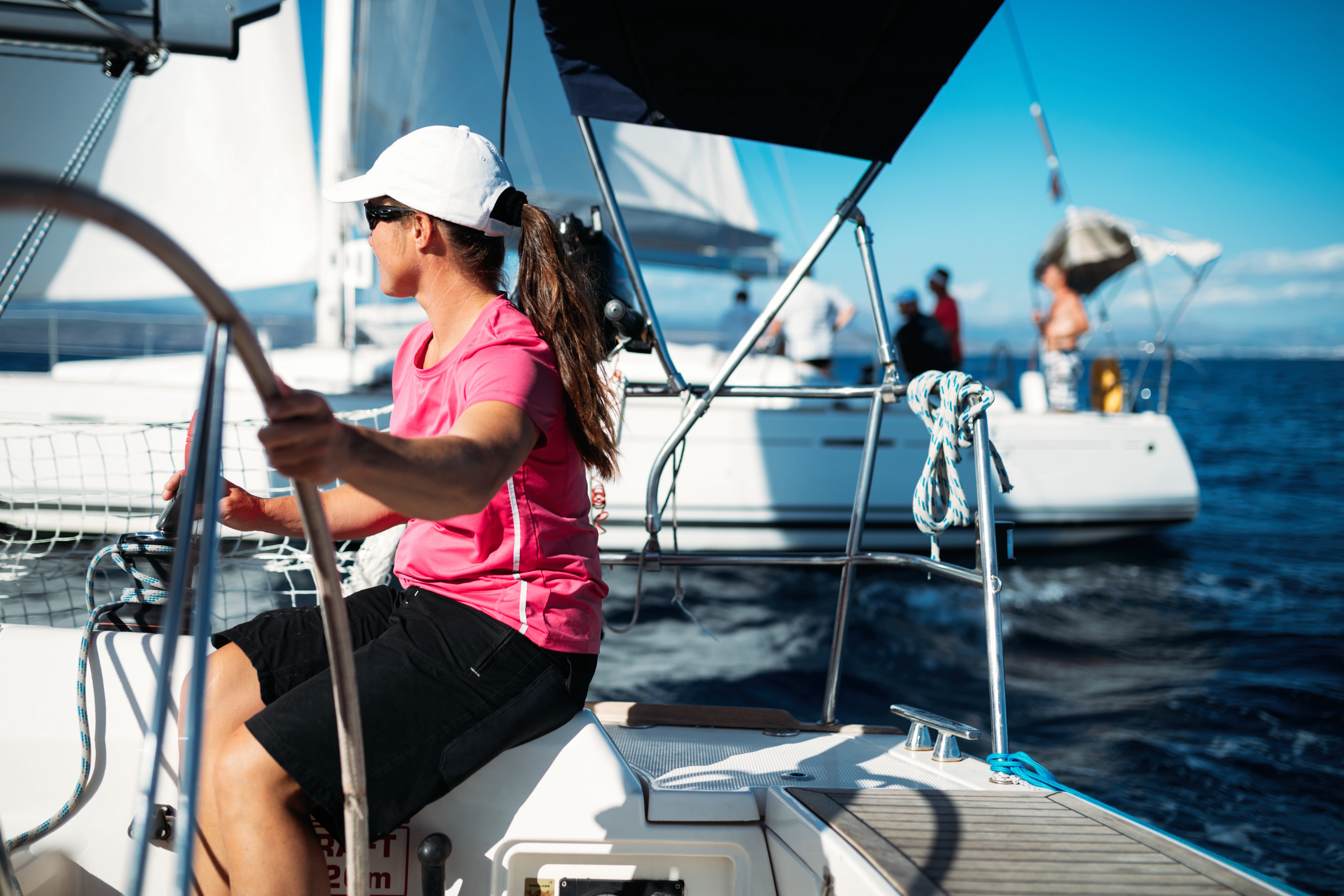
Flotilla skippering is one of the most sought-after seasonal roles in the sailing industry — and one of the most distinctive. It combines genuine sailing responsibility with daily client interaction, improvised problem-solving, and the kind of Mediterranean lifestyle that brings thousands of sailors into professional yachting every year. If you're an experienced sailor with strong people skills and a taste for independence, this guide covers exactly what it takes.
What Does a Flotilla Skipper Do?
A flotilla skipper leads a group of charter yachts — typically 8 to 20 boats — along a pre-planned route through a sailing destination, usually over one or two weeks. Clients charter their own yachts independently but sail as part of the flotilla, with the lead crew providing navigation guidance, technical support, safety oversight, and — critically — the social glue that makes the trip memorable.
The role is split roughly three ways: seamanship, customer service, and logistics. On any given day you might be planning the morning's passage, helping a nervous client with their berthing approach, troubleshooting a faulty bilge pump, leading a group dinner ashore, and keeping a weather eye on an incoming system — all before noon.
It is not a role for people who just want to sail. The boats are almost always the easy part.
Step 1: Build Your Sailing Foundation
Flotilla skippers are expected to be competent, confident sailors capable of handling their lead boat in all conditions, assisting clients on a range of vessel types, and making sound navigational judgements across unfamiliar coastal waters. That requires real sea time — not just course miles.
How to build the right experience:
Progress through structured RYA qualifications: Competent Crew → Day Skipper → Coastal Skipper
Log passages as skipper, not just crew — employers want evidence of independent command
Sail in the Mediterranean or Adriatic specifically if possible; the tidal range, anchorages, and weather patterns are distinct from northern European sailing
Gain experience on both monohulls and catamarans — many flotilla companies now operate mixed fleets
Complete night passages and passages over 60nm logged as skipper
Work as delivery crew, charter crew, or racing crew to diversify your experience base
The minimum qualification most flotilla companies will consider is RYA Day Skipper Practical. In practice, stronger candidates hold Coastal Skipper or Yachtmaster Offshore — and the latter is increasingly expected for lead skipper roles rather than just additional crew positions.
Step 2: Obtain the Required Certifications
Flotilla companies operate commercially in foreign waters and are bound by their insurers' requirements. The certifications below are either required or strongly expected across most major operators.
RYA Day Skipper (Practical)
The minimum sailing qualification accepted by most flotilla companies. Demonstrates competency to skipper a yacht in familiar coastal waters by day. Strong candidates will have significantly more experience than this qualification represents.
RYA Coastal Skipper / Yachtmaster Offshore
The preferred or required qualification for lead skipper and senior positions. Yachtmaster Offshore with Commercial Endorsement is increasingly the standard for any paid skippered role. If you're serious about flotilla work as a career, target this.
International Certificate of Competence (ICC)
Required for skippering vessels in most European countries, including Greece, Croatia, Italy, and Turkey — the primary flotilla destinations. Holders of RYA Day Skipper or above can apply for the ICC directly through the RYA. Essential — do not attempt to work in European waters without it.
VHF Short Range Certificate (SRC)
Required for operating marine VHF radio. Mandatory for any professional skipper role. A one-day course and exam; no reason not to have this well in advance.
STCW Basic Safety Training
Increasingly required by flotilla companies, particularly those operating larger fleets or offering higher-end products. Covers personal survival techniques, fire prevention, first aid, and personal safety. A 5-day course; worth completing as part of a professional maritime CV regardless of whether your target employer requires it.
First Aid Certificate
An RYA-approved first aid certificate or equivalent is expected as a baseline. A full offshore first aid qualification is preferred by many employers.
Step 3: Understand What Flotilla Operations Actually Involve
Sailors who arrive at their first flotilla season having underestimated the customer-facing side of the role tend to struggle. Understanding the operational reality before you apply makes you a stronger candidate and a more effective skipper from day one.
The daily reality of flotilla work:
Morning briefings: You brief the whole flotilla on the day's passage — destination, waypoints, hazards, weather, and any operational notes. This needs to be clear, confident, and appropriately detailed for a mixed-ability group.
Passage leading: You sail the lead boat at the head or sweep of the flotilla, monitoring the group by VHF, managing the fleet's pace, and responding to any issues underway.
Berthing assistance: Many clients struggle with Mediterranean mooring. You'll spend a significant amount of time helping boats berth stern-to in marinas — often in tight spaces, in wind, with an audience.
Technical support: Clients call on you for everything from engine troubleshooting and sail repairs to electrical faults and watermaker problems. A basic mechanical aptitude is not optional.
Social leadership: Evening meals, sundowners, group events — the social programme is a significant part of the product. Flotilla companies sell an experience, and you are central to delivering it.
Weather decision-making: You make the call on whether to sail, where to shelter, and when to change the planned route. Clients will push back when you cancel a passage. The decision is yours.
Step 4: Develop the Non-Sailing Skills
The sailing will not be what makes or breaks your flotilla career. The soft skills will.
Customer service: You are dealing with clients who have saved for a special holiday. Some are nervous sailors out of their depth. Some are overconfident and dismissive of advice. Some have difficult interpersonal dynamics in their boat crew. Patience, diplomacy, and genuine warmth are as important as your passage planning.
Leadership under pressure: When weather deteriorates, a boat goes aground, or a client has a medical emergency, you are the person everyone looks to. Clear, calm decision-making and the ability to project authority without panic are skills developed over time — seek out situations that test them.
Local knowledge: The best flotilla skippers develop deep knowledge of their base area — the anchorages, the tavernas, the hidden bays, the mechanics who actually answer the phone on a Sunday. This knowledge is what separates a competent skipper from an exceptional one clients talk about for years.
Step 5: Apply to Flotilla Companies
The major flotilla operators recruit seasonally, primarily for the Mediterranean sailing season running April through October. Applications typically open from October through February for the following summer season.
Major flotilla operators hiring skippers:
Sunsail (operates across Greece, Croatia, Turkey, the BVI, and others)
The Moorings (similar footprint to Sunsail; same parent company)
Neilson (Greece, Croatia)
Sailing Holidays (Greece — one of the original operators)
Seafarer Cruises
Various independent operators in Greece, Croatia, and Turkey
What your application needs:
A detailed sailing CV covering qualifications, sea miles, vessel types, and any commercial experience
Strong references from sailing-relevant roles or from sailing course instructors/examiners
Any customer-facing or hospitality experience — flotilla companies take this seriously
Evidence of the required certifications
Interviews will probe your sailing background, how you handle conflict with clients, how you make safety decisions under pressure, and what you'd do in specific emergency scenarios. Prepare specific examples rather than generalities.
Browse flotilla skipper jobs on BoatyJobs →
Step 6: Progress Through Flotilla Roles
Most skippers don't start as lead skipper. Typical entry points are:
Mate / Hostess: Crew member on the lead boat focused on client liaison, social programme delivery, and supporting the skipper. Often the entry point for people with strong hospitality backgrounds but less sailing experience.
Skipper (without lead responsibility): Some larger flotillas have multiple skippers covering different sections of the fleet. A strong entry point for sailors who meet the sailing requirements but are building the leadership and client management experience.
Lead Skipper: Full command of the flotilla. Responsible for all aspects of the operation, including safety decisions, route management, and the overall client experience.
Base Manager / Technical Coordinator: Shore-based management of the flotilla operation. Often the next step for experienced lead skippers who want to move off the water into broader operational responsibility.
Step 7: Consider Further Qualifications
Additional qualifications increase your competitiveness and open access to more senior roles.
RYA Yachtmaster Offshore with Commercial Endorsement — the target qualification for serious flotilla career development; increasingly expected for lead skipper roles
RYA Cruising Instructor — allows you to deliver sailing tuition alongside the flotilla programme; highly valued by companies that offer teaching holidays
Catamaran endorsement — many fleets are increasingly catamaran-heavy; specific multihull experience is a genuine differentiator
STCW Medical First Aid — for operators running larger or more remote programmes
Yachtmaster Ocean — for skippers with ambitions beyond the Mediterranean into Atlantic and ocean delivery work
How Much Do Flotilla Skippers Earn?
Flotilla skippering is seasonal work and remuneration reflects that — but packages typically include accommodation, meals, and use of the lead boat, which significantly offsets the headline salary.
Mate / Hostess: €1,200–€1,800/month + accommodation and meals
Skipper (junior / assistant): €1,500–€2,200/month + accommodation and meals
Lead Skipper: €2,000–€3,500/month + accommodation and meals
Senior / experienced Lead Skipper: €3,000–€4,500/month at premium operators
Many skippers return to the same company and destination for multiple seasons, with incremental salary increases and growing route knowledge. Some transition into winter roles — Caribbean flotilla seasons, yacht deliveries, or shore-based work — to extend annual earnings.
Frequently Asked Questions
What is the minimum qualification to become a flotilla skipper? RYA Day Skipper Practical is the minimum most companies will consider, but competitive candidates hold Coastal Skipper or Yachtmaster Offshore. The ICC is mandatory for European waters. STCW Basic Safety is increasingly expected. Arrive at application with at least Day Skipper, ICC, VHF SRC, and a first aid certificate as a baseline.
Do I need experience in Mediterranean sailing specifically? It helps significantly. The Med has almost no tidal range, distinct wind patterns (meltemi, mistral), and a marina culture built around stern-to mooring. If you've only sailed in tidal UK or Northern European waters, try to get a Mediterranean passage or flotilla holiday under your belt before applying — it demonstrates awareness of the environment you'll be working in.
Can I do flotilla work with no customer service experience? You can apply, but expect to find the role more challenging than the sailing. Most employers will probe your people skills in interview. Prior experience in hospitality, teaching, tour leading, or any client-facing role strengthens your application significantly.
Is flotilla work a good entry point into professional sailing? Yes — it is one of the best. It provides paid sailing experience in a supported environment, strong CV content, and a network within the professional sailing industry. Many charter skippers, delivery captains, and sailing instructors started their professional careers in flotilla work.
Which sailing destination is best for flotilla work? Greece is the largest market — the Ionian and Aegean are the heartlands of European flotilla sailing. Croatia has grown significantly over the past decade. Turkey remains popular. The BVI and Caribbean operate winter seasons for operators with Atlantic programmes. Most skippers start in Greece and develop local knowledge over multiple seasons.
Ready to Find a Flotilla Skipper Role?
BoatyJobs lists flotilla skipper, mate, and lead crew vacancies across Greece, Croatia, Turkey, the Caribbean, and beyond — from first-season positions to senior lead skipper roles with established operators.